




Deepfake Warfare: How AI Is Destroying Digital Trust and Redefining Global Security
The End of Trust in the Digital Age
For decades, digital technology has enhanced communication, transparency, and access to information. The internet created a world where visual and audio content became primary sources of truth. However, with the rapid advancement of artificial intelligence, this foundation is now under threat.
We are entering an era where reality can be fabricated with precision.
Deepfake technology—once a niche innovation—has evolved into a powerful tool capable of generating hyper-realistic videos, voices, and identities. What makes this transformation alarming is not just the technology itself, but how it is being weaponized.
This rapidly evolving threat is now recognized as deepfake warfare.
It represents a new form of conflict where the battlefield is not physical or digital infrastructure—but human perception. In this landscape, trust becomes the primary casualty.
Understanding Deepfake Technology: The Mechanics Behind Synthetic Reality
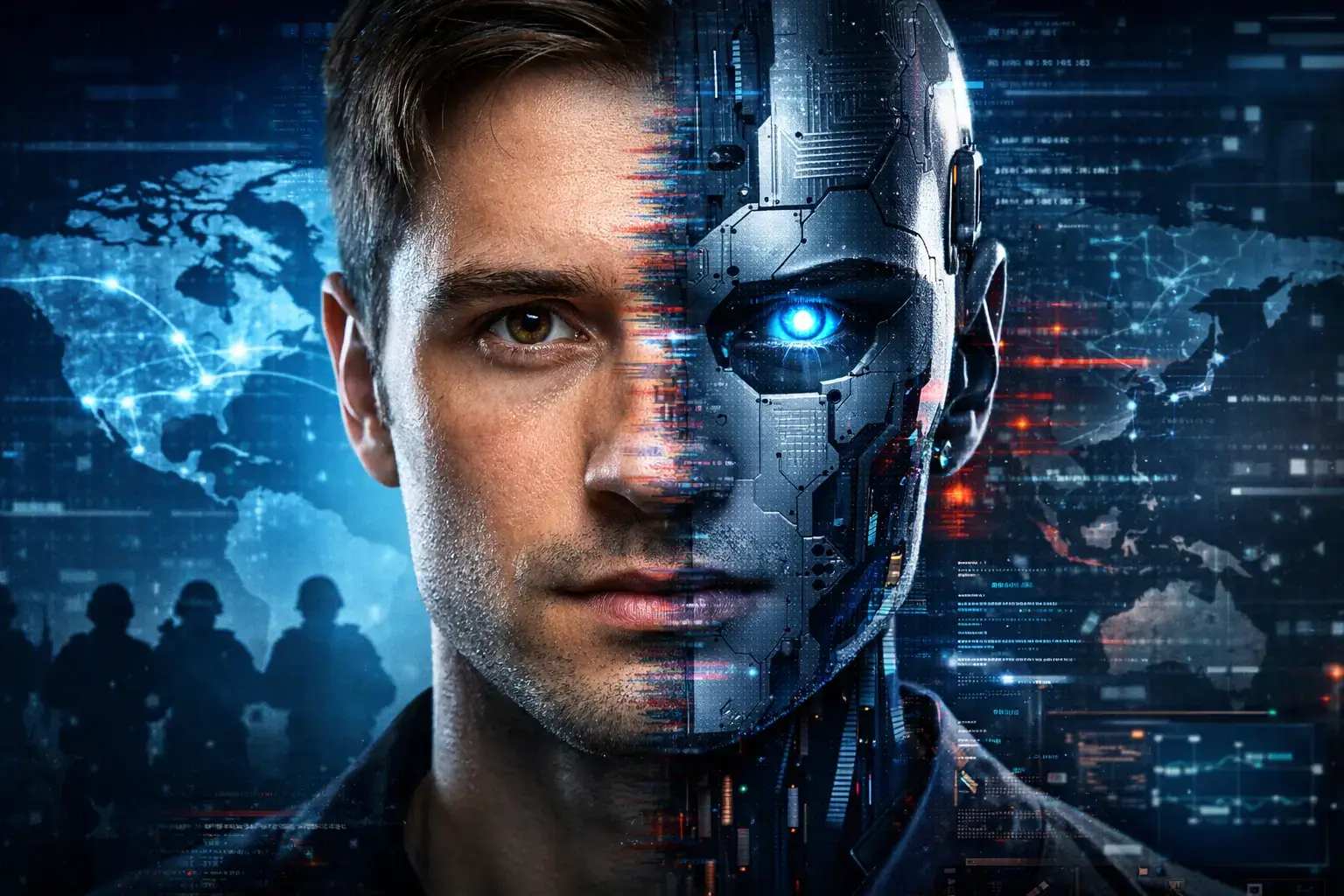
Deepfakes are AI-generated media created using advanced machine learning models designed to replicate human appearance, voice, and behavior.
Core Technologies Driving Deepfakes
1. Generative Adversarial Networks (GANs)
GANs consist of two neural networks:
- A generator, which creates synthetic content
- A discriminator, which evaluates authenticity
Through continuous competition, these systems produce increasingly realistic outputs.
2. Diffusion Models (Next-Generation AI)
Diffusion models have significantly improved the realism of generated images and videos. These models gradually transform noise into structured content, enabling highly detailed and lifelike outputs.
3. Neural Voice Cloning
Modern AI systems can replicate a person’s voice using minimal audio input. These models capture:
- Tone
- Accent
- Emotional nuance
This allows attackers to create convincing audio impersonations.
4. Real-Time Facial Reenactment
AI can now manipulate facial expressions in real-time video streams, enabling live deepfake impersonation during video calls.
Why Deepfakes Have Become a Global Threat
Several factors have accelerated the spread of deepfake technology:
- Open-source AI tools and frameworks
- Affordable cloud-based GPU computing
- Rapid advancements in model efficiency
- User-friendly interfaces requiring minimal expertise
The result is clear: deepfake creation is now accessible at scale.
Defining Deepfake Warfare
Deepfake warfare refers to the use of synthetic media for:
- Psychological operations (PsyOps)
- Information warfare
- Strategic deception
- Cyber-enabled manipulation
Unlike traditional cyberattacks, deepfake warfare targets human cognition and trust, making it significantly more dangerous.
Why Deepfakes Are the Ultimate Weapon
1. Low Cost, High Impact
Deepfakes require fewer resources compared to traditional military or cyber operations but can produce large-scale disruption.
2. Scalability
A single deepfake video can reach millions within minutes through social media platforms.
3. Plausible Deniability
Attribution is difficult, allowing attackers to operate without immediate consequences.
4. Psychological Influence
Humans inherently trust visual and auditory content, making deepfakes highly persuasive.
Real-World Threat Scenarios
1. Political Manipulation and Election Interference
Deepfakes can be used to:
- Fabricate speeches by political leaders
- Spread false policy announcements
- Incite unrest or violence
A strategically timed deepfake could influence voter behavior and destabilize democratic processes.
2. Financial Fraud and Economic Disruption
AI-powered fraud is rapidly evolving.
Emerging Threats:
- CEO voice impersonation
- AI-generated video approvals
- Synthetic identity fraud
Future scenarios may involve real-time deepfake video calls authorizing high-value financial transactions.
3. Corporate Espionage and Market Manipulation
Deepfakes can:
- Spread false corporate announcements
- Manipulate stock prices
- Damage brand credibility
A fabricated executive statement could trigger market panic within minutes.
4. Identity-Based Attacks
Modern authentication systems rely on:
- Facial recognition
- Voice verification
- Video identity checks
Deepfakes can bypass all three, creating a serious vulnerability in digital identity systems.
Deepfake Warfare in Geopolitics
Artificial intelligence is becoming a strategic asset in global power competition.
Potential State-Level Uses:
- Election interference campaigns
- Propaganda dissemination
- Diplomatic manipulation
- Military misinformation
Strategic Risk
A single deepfake video could:
- Trigger diplomatic crises
- Escalate military tensions
- Cause global instability
The Collapse of Digital Trust
1. The End of Visual Credibility
Deepfakes challenge the fundamental assumption that visual evidence is reliable.
2. The Liar’s Dividend
Individuals can deny real evidence by claiming it is AI-generated, leading to:
- Legal ambiguity
- Reduced accountability
- Increased misinformation
3. Media Credibility Crisis
Journalism faces growing challenges:
- Verifying authenticity quickly
- Maintaining audience trust
- Preventing misinformation spread
Deepfake + Cybersecurity: A New Threat Landscape
Deepfakes amplify existing cyber threats.
Combined Attack Models:
- Phishing with AI-generated voices
- Business Email Compromise with video verification
- Social engineering using AI avatars
Future Cyber Threats
- Autonomous AI-driven attacks
- Real-time impersonation systems
- Deepfake-enabled ransomware
This represents a new frontier in cybersecurity.
Deepfake Detection: An Ongoing Arms Race
Current Detection Methods
- AI-based forensic analysis
- Pixel-level inconsistencies
- Blockchain verification systems
- Digital watermarking
Key Challenges
- Rapid improvement of generation models
- Inconsistent detection accuracy
- Limited real-time verification
Detection systems are constantly struggling to keep up.
The Role of Technology Companies
Major technology companies are attempting to mitigate deepfake risks through:
- AI-generated content labeling
- Detection tools
- Platform moderation policies
Ongoing Challenges
- Massive scale of content distribution
- Ethical concerns regarding censorship
- False positives and false negatives
AI Regulation: The Global Governance Challenge
Key Issues
- Defining harmful versus acceptable deepfakes
- Cross-border enforcement
- Balancing innovation with regulation
Emerging Solutions
- Mandatory labeling of AI-generated content
- Legal penalties for malicious use
- International cooperation on AI governance
Impact on Developing Nations
Developing countries face heightened risks due to:
- Lower awareness of deepfake technology
- Limited cybersecurity infrastructure
- Weak regulatory frameworks
Potential Consequences
- Political instability
- Financial fraud
- Social unrest driven by misinformation
Strategic Opportunity
These nations can:
- Develop early AI governance frameworks
- Invest in cybersecurity education
- Build local detection capabilities
The Future of Deepfake Warfare (2026–2035)
Emerging Trends
- Real-time deepfake video communication
- AI-generated digital humans
- Identity manipulation in virtual environments
- Fully synthetic news ecosystems
Key Prediction
Truth will become a scarce and valuable resource.
Defense Strategies
For Individuals
- Verify information before trusting it
- Avoid reacting emotionally to viral content
- Rely on credible sources
For Organizations
- Implement Zero Trust security models
- Deploy AI-based fraud detection systems
- Conduct employee awareness training
For Governments
- Establish AI forensic units
- Develop rapid response systems
- Strengthen international collaboration
Strategic Recommendations
1. Global Collaboration
Deepfake threats require coordinated international responses.
2. Public Awareness
Digital literacy is critical in combating misinformation.
3. Ethical AI Development
Developers must prioritize safety and accountability.
4. Continuous Innovation
Defense mechanisms must evolve faster than threats.
The Battle for Truth
Deepfake warfare represents one of the most significant challenges of the digital age. It is not merely a technological issue—it is a crisis of trust.
As artificial intelligence continues to evolve, the line between reality and fabrication will become increasingly blurred.
The future depends on how effectively we respond today.
Because in a world where anything can be faked,
the ability to verify truth becomes humanity’s most critical defense.