

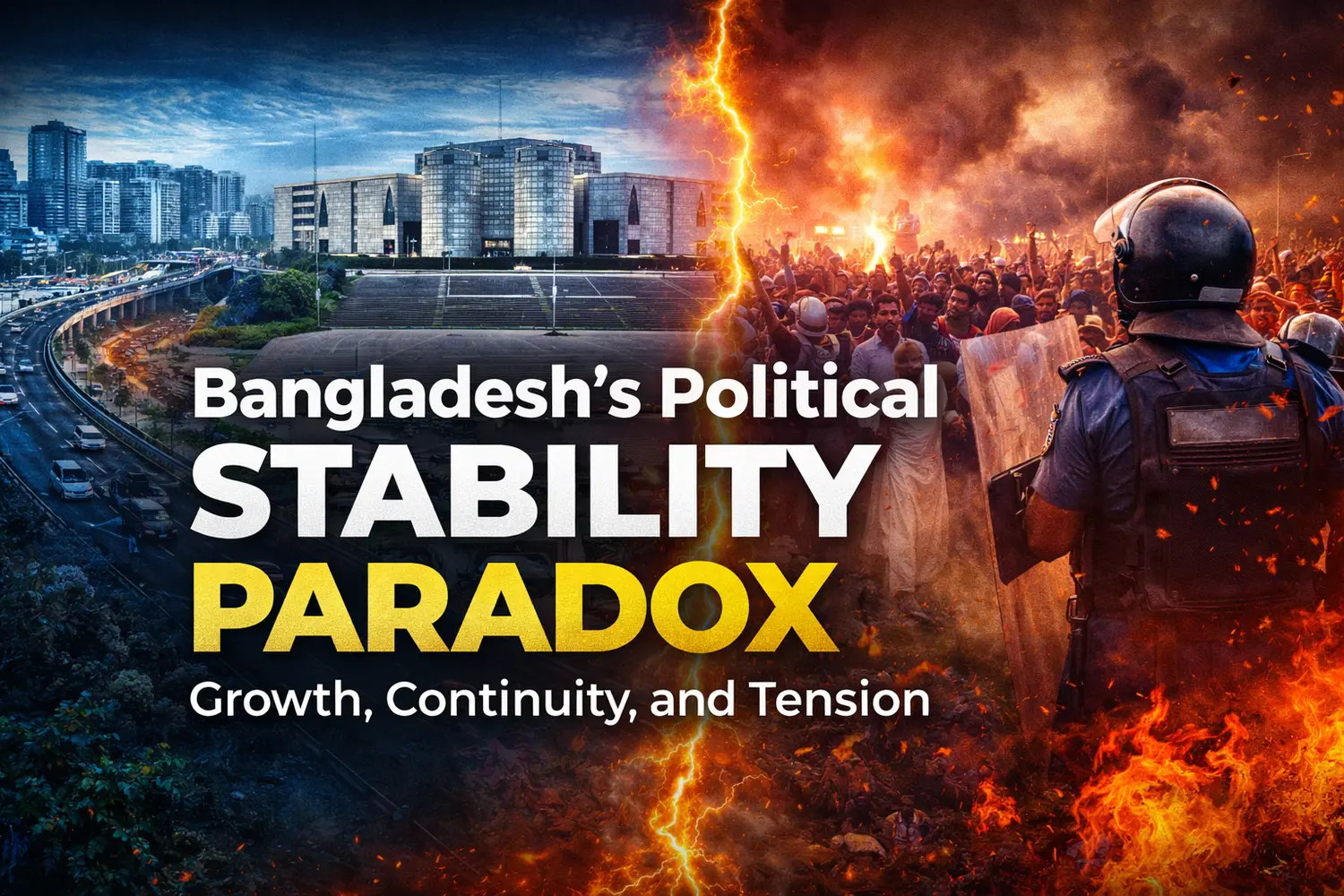



Bangladesh’s 2026 Election and Referendum: Why Voting “Yes” Matters and What It Could Change.
Introduction: A Turning Point in Bangladesh’s Democratic Journey
On 12 February 2026, Bangladesh is preparing for one of the most consequential democratic events in its modern history: a general parliamentary election coupled with a constitutional referendum on the July National Charter reforms. Voters will not only choose their Members of Parliament but also decide on fundamental changes to the country’s political architecture.
This dual vote—both electoral and constitutional—positions Bangladesh at a crossroads between historical political dynamics and a reformed constitutional future. This article explains why participating in the vote matters, examines what changes could result from a “yes” vote in the referendum, and lays out reform proposals and democratic imperatives for strengthening democratic participation and trust.
The 2026 Electoral Landscape: What’s at Stake
Bangladesh will hold elections for the 13th Jatiya Sangsad (Parliament) on February 12, 2026, where 127.7 million citizens are eligible to vote.
This election takes place under an interim government led by Nobel laureate Muhammad Yunus, following significant political upheaval in recent years. Notably:
-
The Awami League, the dominant party for decades, is not participating due to suspension, making the contest highly competitive.
-
The Bangladesh Nationalist Party (BNP) and allied groups—including Islamist parties—are key contenders.
-
This vote is held soon after the Supreme Court restored the nonparty caretaker system for future elections (not this one), a development seen as a democratic reform milestone.
Alongside the parliamentary vote, a constitutional referendum will ask citizens whether to approve the July National Charter, an extensive reform package aimed at institutional restructuring.
Why Dual Voting Can Be Transformative
Combining an election with a referendum is rare, and it reflects deep political consensus on reform—or at least the urgency of anchoring governance changes in popular legitimacy.
The referendum asks voters to approve the July National Charter Implementation Order, 2025, which includes proposals such as:
-
Introducing a bicameral legislature with an upper house to balance power.
-
Limiting the tenure of prime ministers to prevent excessive concentration of power.
-
Strengthening judicial independence and reducing arbitrary executive influence.
-
Institutionalizing a nonpartisan electoral framework that protects future democratic processes.
Such changes would be anchored in the Constitution, making them harder to reverse and giving the electorate a clearer stake in political governance.
Why Every Vote (Including “Yes”) Matters: Structural and Democratic Impacts
1. Reforming Governance to Limit Power Concentration
One of the core arguments for voting “yes” in the referendum is that the proposed reforms aim to limit excessive executive authority and enhance checks and balances. Under the proposed changes:
-
No individual could serve as prime minister indefinitely, helping to mitigate the risks of entrenched power.
-
Introduction of an upper parliamentary chamber could ensure broader representation and oversight.
This structural balance is a response to decades of dominant-party governance and seeks to make institutions more responsive rather than personalized.
2. Strengthening Electoral Integrity and Participation
The 2026 election, with voter registration approaching 128 million, is one of the largest democratic exercises in the world.
Engagement in both the parliamentary vote and referendum signals a renewed popular commitment to institutional reform and democratic legitimacy. Historically, Bangladesh’s elections have at times struggled with credibility issues due to boycott politics, executive influence, and questions around Election Commission independence.
A “yes” vote could:
-
Enhance public trust in the electoral framework.
-
Empower the legislature to better balance competing political interests.
-
Support reforms aimed at transparent voter registration procedures and citizen inclusion.
3. Empowering Citizens Beyond Party Lines
Voting—especially in a referendum—shifts the narrative from party allegiance to citizen empowerment. When citizens cast a ballot on constitutional reform, they are not just choosing leaders: they are defining the rules of democratic engagement.
This is particularly relevant in a polarized political environment where parties have historically dominated constitutional debates. By voting on rules instead of rulers, citizens shape the democratic architecture itself.
4. Youth and New Voter Momentum
Bangladesh’s youth demographic—especially those voting for the first time—represents a crucial force for future change. Recent political shifts reflect both enthusiasm and disillusionment among young voters caught between historical party politics and aspirations for genuine political reform.
Active participation from youth and new voters can:
-
Reinforce the legitimacy of democratic institutions.
-
Pressure political elites to commit to reform.
-
Expand the democratic base beyond conventional patronage networks.
Key Reform Proposals on the Referendum Ballot
The referendum is structured around four major questions derived from the July National Charter, covering:
-
Government structure changes (bicameralism, checks and balances).
-
Executive term limits to avoid prolonged individual dominance.
-
Judicial autonomy and oversight protections.
-
Strengthening civil institutions and electoral bodies.
Advocates of reform argue that voting “yes” means endorsing a more resilient democracy aligned with constitutional accountability.
Challenges and Criticisms: Why Debate Is Necessary
While a “yes” vote offers promise, it is not universally embraced. Several critics highlight concerns such as:
-
Lack of deep public understanding about the referendum specifics, with quieter civic engagement compared to election campaigning.
-
Debate over neutrality: Government actors have faced directives to refrain from campaigning for a “yes” vote to preserve institutional neutrality.
-
Some political observers warn that reforms could be implemented unevenly or without sufficient institutional safeguards.
Debate and critique are vital in any democratic reform process, ensuring transparency, accountability, and informed choice.
Why an Informed “Yes” Vote Strengthens Democracy
Choosing “yes” in a referendum is not simply endorsing the interim government’s agenda. If informed by civic dialogue and public debate, a “yes” vote represents:
-
A collective mandate for constitutional stability.
-
Public ownership of political reform.
-
A stronger foundation for future elections.
-
Enhanced mechanisms for civic participation and accountability beyond periodic leadership contests.
Conclusion: Voting as Choice and Change
The 12 February 2026 election and referendum represent more than a political calendar event in Bangladesh—they embody a pivotal moment for democratic evolution.
By participating and thoughtfully engaging with both ballots, citizens have the opportunity to:
-
Assert their voice in political structure reform.
-
Shape election mechanics for future generations.
-
Reinforce democratic norms that elevate citizen power above partisan dominance.
In this context, voting “yes”—with clear information and deliberation—can be a step toward institutional resilience and democratic renewal.
Bangladesh’s future in 2026 is not merely about who gets elected, but about how the rules of governance are rewired by the people themselves.
Why voting matters in Bangladesh referendum, Bangladesh election and referendum explained, Bangladesh governance reform vote, Bangladesh election legitimacy analysis, Bangladesh democratic reform 2026,