
A Country Known Through Headlines, Not Context
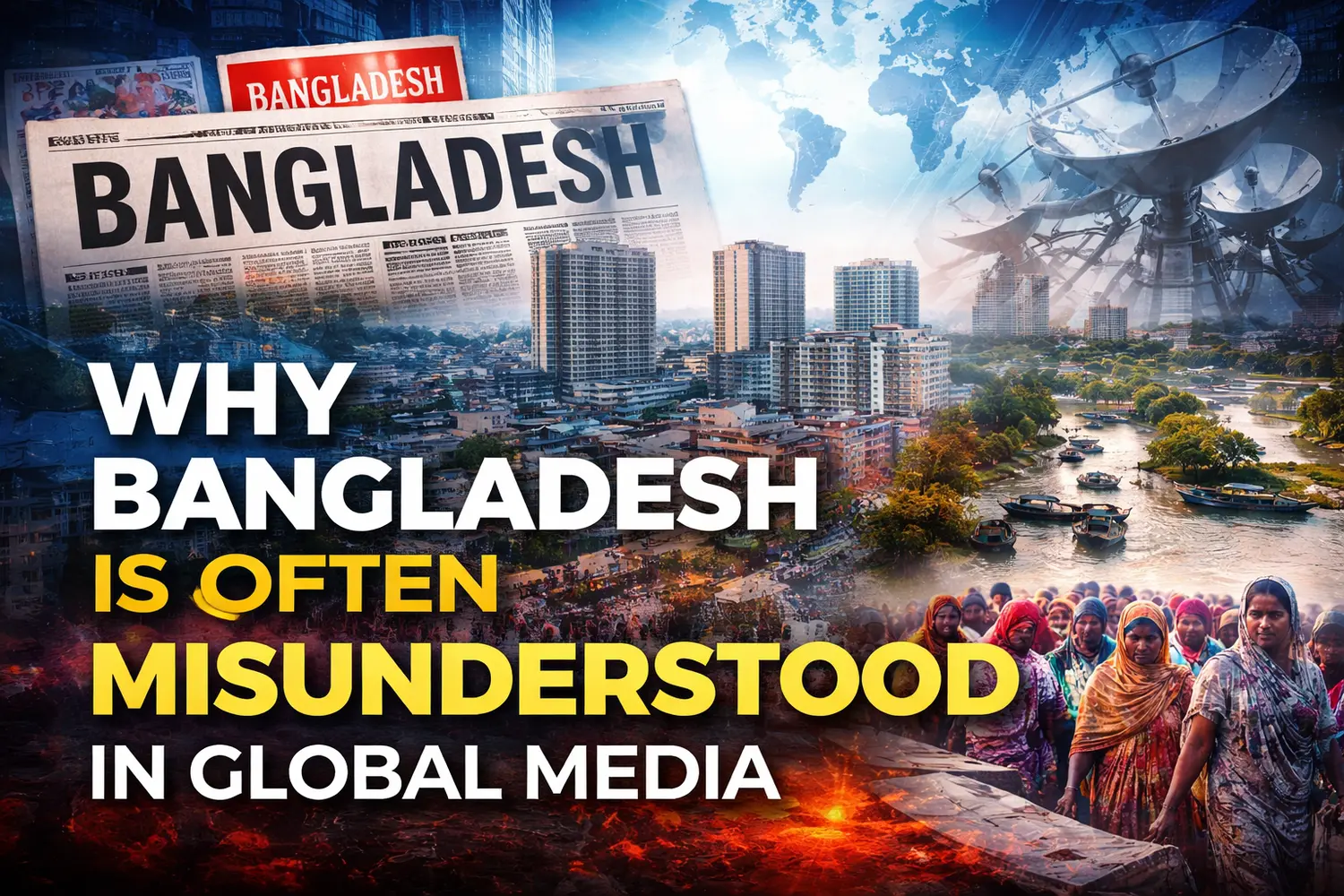
To many international readers, Bangladesh appears in global news only during moments of crisis—natural disasters, political tensions, factory accidents, or human rights concerns. These stories are not false, but they are incomplete. When a nation of over 170 million people is repeatedly framed through a narrow set of events, misunderstanding becomes inevitable.
Bangladesh today is a country of contradictions and transitions: rapid economic growth alongside structural challenges, political continuity mixed with contestation, digital progress coexisting with regulatory gaps. Yet global media coverage often struggles to capture this complexity. This article examines why Bangladesh is often misunderstood in global media, how those narratives are formed, and what international readers are usually missing.
The Power of Single-Story Narratives
Global journalism frequently relies on simplified narratives to explain distant countries to unfamiliar audiences. Over time, these narratives harden into stereotypes.
For Bangladesh, the dominant frames tend to be:
- Climate vulnerability
- Labor exploitation in the garment sector
- Political instability
- Poverty and overpopulation
Each of these issues is real. The problem arises when they are presented in isolation, detached from social progress, institutional learning, and economic change. When repetition replaces context, Bangladesh becomes a symbol of problems rather than a society navigating them.
This “single-story” approach discourages nuance and trains audiences to expect crisis, even when the broader reality is more stable.
Crisis-Driven News Economics
International media operates within an attention economy. Editors prioritize stories that are dramatic, urgent, and emotionally charged—because those stories travel.
Bangladesh enters global headlines primarily when:
- A cyclone hits the coast
- Political protests turn violent
- A factory accident occurs
- A critical international report is released
What rarely receives comparable attention are:
- Incremental governance reforms
- Export diversification efforts
- Improvements in disaster preparedness
- Expansion of digital public services
As a result, Bangladesh is perceived as a country constantly reacting to emergencies, rather than one engaged in long-term planning and adaptation.
Missing Local Context in International Reporting
Many global reports on Bangladesh are produced with limited time, resources, and local language access. This creates significant contextual gaps.
Common issues include:
- Political analysis without historical background
- Cultural practices interpreted through foreign lenses
- Legal processes simplified into moral judgments
Without understanding Bangladesh’s post-colonial history, demographic pressures, and institutional constraints, international coverage often misreads intent, capacity, and consequence. Events are reported accurately, but interpreted incompletely.
The Outsized Role of NGO and Advocacy Narratives
International journalists frequently rely on reports from NGOs, advocacy groups, and international watchdogs. These sources play a crucial role in accountability—but they are not neutral observers.
Their focus is often on:
- Rights violations
- Governance failures
- Structural inequalities
What is often underrepresented:
- Policy trade-offs
- Resource constraints
- Incremental progress
- Domestic debates around reform
This creates a skewed picture where Bangladesh appears as a case study in deficiency, rather than a country balancing competing priorities under real-world limitations.
Comparing Bangladesh Through Unfair Benchmarks
Another source of misunderstanding lies in comparison. Bangladesh is often measured against:
- Western democratic norms
- High-income governance standards
- Idealized institutional models
Such comparisons overlook critical factors:
- Late industrialization
- Post-independence political disruptions
- High population density
- Limited fiscal space
When judged against benchmarks it was never positioned to meet at the same pace, Bangladesh is framed as “failing,” rather than evolving within constraints.
The Garment Industry Trap
The Ready-Made Garments (RMG) sector dominates Bangladesh’s global image. It employs millions and underpins export earnings, yet media coverage overwhelmingly focuses on its darkest moments.
Typical narratives highlight:
- Unsafe factories
- Low wages
- Worker exploitation
What is often missing:
- Post-crisis regulatory reforms
- Factory inspection regimes
- Worker skill mobility
- The role of global brands in price pressure
This one-dimensional framing ignores how Bangladesh operates within a highly competitive global supply chain, where power asymmetries extend far beyond national borders.
Political Coverage Without Institutional Depth
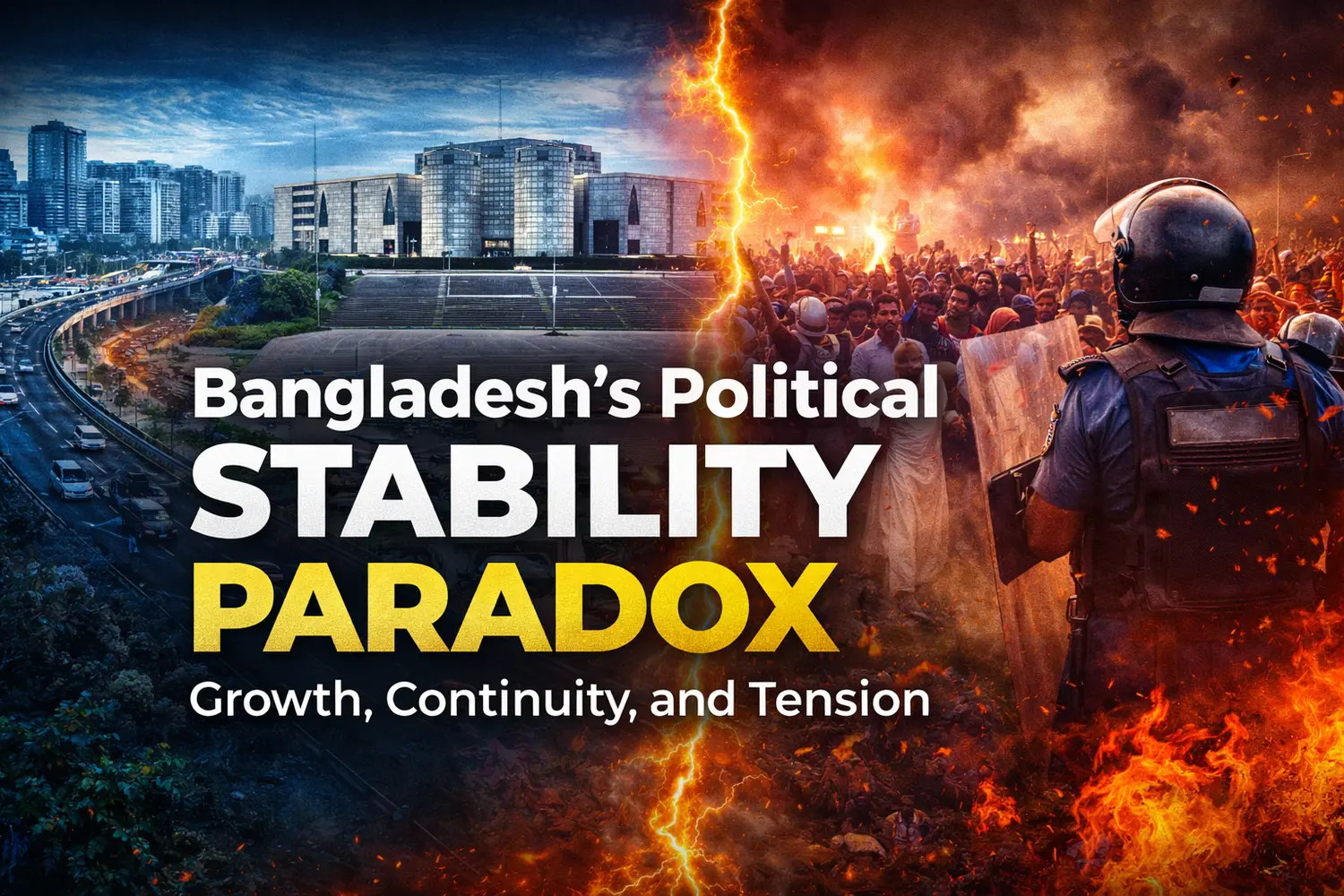
Political reporting on Bangladesh often centers on elections, protests, and opposition-government conflict. These stories are important—but incomplete.
What global media rarely explains:
- The structure of electoral institutions
- Historical roots of political mistrust
- The continuity of administrative governance
- The distinction between political contestation and state collapse
The absence of institutional context leads international audiences to assume perpetual instability, even when core state functions continue uninterrupted.
Climate Change: Victimhood Without Agency
Bangladesh is frequently described as one of the world’s most climate-vulnerable countries. This is factually correct—but the framing often strips the country of agency.
Underreported realities include:
- Community-led adaptation strategies
- Investment in flood control and early warning systems
- Policy experimentation in climate resilience
- Integration of climate risk into national planning
By portraying Bangladesh only as a victim, global media overlooks its role as a laboratory of adaptation for climate-affected societies worldwide.
The Language Barrier and Invisible Debates
Much of Bangladesh’s intellectual, political, and journalistic discourse occurs in Bangla. International media rarely engages with:
- Local investigative reporting
- Academic research published domestically
- Policy debates happening outside English-language spaces
This language barrier creates a vacuum where global narratives are formed without reference to domestic conversations, reinforcing external assumptions over internal realities.
Why the Misunderstanding Persists
The persistent misrepresentation of Bangladesh is not the result of a single bias, but of structural patterns in global journalism:
- Short news cycles
- Limited foreign correspondents
- Familiar narrative templates
- Audience expectations shaped by repetition
Once a country is categorized in a certain way, alternative stories struggle to gain visibility.
The Real Cost of Misrepresentation
Misunderstanding Bangladesh has tangible consequences:
- Policy decisions based on incomplete analysis
- Investor caution driven by perceived instability
- Diplomatic engagement shaped by outdated assumptions
- Public opinion influenced by crisis-only imagery
For Bangladesh, perception is not just about image—it affects opportunity, leverage, and voice in global conversations.
Rethinking Bangladesh Beyond Headlines
A more accurate understanding of Bangladesh requires a shift in approach:
- Contextual reporting over episodic coverage
- Long-term analysis instead of event-driven judgment
- Inclusion of local voices and expertise
- Recognition of both progress and persistent challenges
Bangladesh is neither a miracle success story nor a failed state. It is a work-in-progress nation, navigating development, governance, and global integration under complex conditions.
Conclusion: Seeing Bangladesh Clearly
Bangladesh is often misunderstood in global media not because facts are wrong, but because context is missing. When headlines replace history and crises replace continuity, perception becomes distorted.
For international readers, understanding Bangladesh means looking beyond breaking news—into systems, institutions, trade-offs, and lived realities. Only then does the country emerge not as a caricature, but as a nuanced and consequential actor in the global landscape.
Bangladesh global media narrative, international media coverage of Bangladesh, Bangladesh image in world media.